
What laser power is needed for cutting sheet metal?
What laser power is needed for cutting sheet metal? This is an important question worth asking before starting the cutting process. Choosing the right laser power has a huge impact on cutting quality, production speed, and operating costs. The required laser power depends on several factors, such as the thickness of the material, its type, and the desired edge quality. Understanding these factors allows you to select the best solution that ensures both efficiency and precision. In this article, we explain how to choose the optimal laser power to achieve excellent sheet-metal cutting results.
In this article:
- How does laser cutting of sheet metal work?
- Laser power vs. sheet thickness
- Choosing laser power by material type
- What about cutting-edge quality?
- Our sheet-metal cutting offer
- Summary – what laser power is needed for cutting sheet metal?
How does laser cutting of sheet metal work?
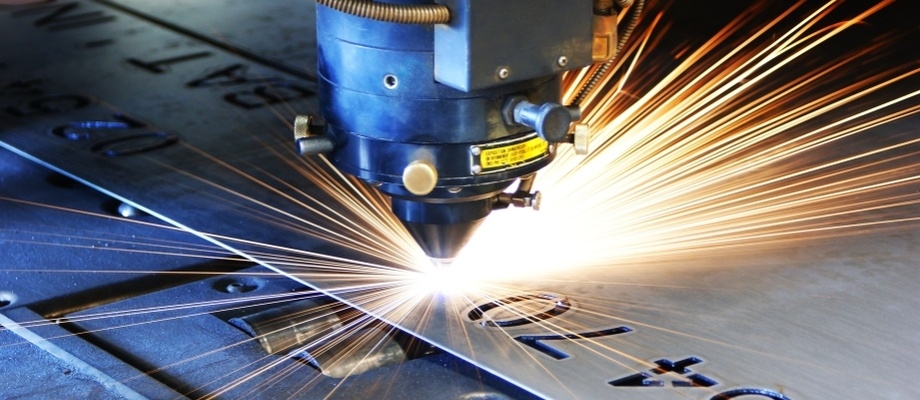
Laser cutting of sheet metal involves directing a concentrated beam of light at the material, causing it to melt or vaporize along the designated path. The question of what laser power is appropriate depends on several factors, such as:
- material type – thicker materials require higher laser power;
- cutting quality – higher power ensures better edge quality;
- cutting speed – higher laser power enables faster processing.
Keep in mind that excessively high power may overheat the material and cause deformation, while too little power can result in slow cutting or low precision.
Laser power vs. sheet thickness
Laser power is selected primarily based on the thickness of the sheet metal. The general guideline for matching laser power to material thickness:
- up to 3 mm – laser power between 500 W and 1000 W, ideal for thin steel, copper, and aluminium sheets;
- 3 mm to 10 mm – 1000 W to 3000 W, suitable for medium-thickness materials;
- above 10 mm – 3000 W and higher, for thick metals such as stainless steel or titanium.
Adjusting the laser power to the sheet thickness ensures optimal cutting quality, reducing material waste and processing time.
Choosing laser power by material type
Not only thickness but also material type plays a crucial role when selecting laser power. Different materials require different laser parameters.
Material types and recommended laser power:
- stainless steel – requires higher power for clean and precise results;
- aluminium – needs medium power; it is soft but prone to deformation;
- copper and brass – require higher laser power due to durability and heat-conducting properties.
Matching the laser to the material ensures the best cutting quality without extra post-processing.
What about cutting-edge quality?
The quality of the cut edge is one of the most important factors when selecting laser power. Higher power generally results in better edge quality. Too little power can cause irregularities and excessive “soot” on the cut edge, often requiring additional finishing.
Laser power vs. edge quality:
- higher power – clean, smooth edges that require no further treatment;
- lower power – may produce uneven or rough edges, requiring grinding or polishing.
Choosing the right power can save time and money by eliminating the need for additional machining.
Our sheet-metal cutting offer
If you are interested in sheet-metal cutting, we offer a wide range of services covering various materials and thicknesses. At Metaloplastyka we provide:
- laser cutting – precise cutting of sheets of various thicknesses;
- brass laser cutting – high-quality cutting ideal for decorative elements;
- copper laser cutting – effective processing of copper sheets of various thicknesses;
- aluminium laser cutting – precise cutting even of thicker aluminium sheets.
With modern machines and advanced technology, we ensure top-quality cutting tailored to your needs. Contact us to learn how our services can improve your production process!
Summary – what laser power is needed for cutting sheet metal?
We hope you now know what laser power is required for cutting sheet metal. The correct choice of laser power depends on sheet thickness, material type, and the desired edge quality. Proper power selection allows for precise results, high-quality components, and production efficiency. Thanks to laser technology, it is possible to cut sheet metal of various thicknesses while maintaining excellent quality, significantly improving production effectiveness. If you want to learn more, explore our laser-cutting services and contact us to tailor solutions to your needs!